Maximum control over fluid layers and inflow in your stainless steel storage tank
In many industrial applications, stable stratification refers to the controlled layering of fluids and is essential for maximizing efficiency, minimizing energy consumption, and ensuring consistent product quality. Achieving this requires precise control over how fluids enter the tank. This is where diffusers play a key role. By slowing and distributing the inflow evenly, diffusers reduce turbulence and prevent unwanted mixing of fluid layers. At Gpi, we design and build stainless steel storage tanks with integrated diffuser systems, tailored to maintain stratification and optimize performance based on your specific process requirements.
What is stratification in a storage tank?
Stratification refers to the natural or controlled separation of fluids into layers within a tank, based on differences in temperature, density, or composition. Typically, warmer or lighter fluids rise to the top, while cooler or denser fluids settle at the bottom. This layering effect only forms and remains stable if the incoming fluid enters the tank at a slow, even rate that avoids disturbing the layers. Stratification is a critical process used in a wide range of industrial applications, such as:
- Hot water storage tanks, where maintaining thermal layers reduces heat loss and increases energy efficiency
- Chemical processing tanks, where preventing mixing of different substances preserves product integrity
- Water treatment facilities, where separating sludge and liquids is essential for effective purification
- Food and beverage production, where layering can improve product quality and process control
When stratification is not properly maintained, process efficiency declines, energy costs go up, and the likelihood of equipment damage or product contamination becomes greater. Controlling the fluid inflow is essential to maintaining these layers, and diffusers play a crucial role in this process.

The role of diffusers in stratification
Diffusers are specially designed devices that evenly distribute fluid entering the tank, significantly reducing the velocity and energy of the inflow. By dispersing fluid through multiple small openings or directions, diffusers minimize turbulence and prevent unwanted mixing of layers. This controlled inflow allows stratification to form naturally or remain stable over time, ensuring the tank operates as intended.
Benefits of using Gpi diffuser systems include:
- Preventing mixing between warm and cold fluid layers, preserving temperature gradients
- Maintaining chemical separation to protect product quality
- Reducing turbulence and foam formation, which can disrupt processing
- Avoiding resuspension of settled solids or particles, protecting water or product clarity
- Extending the lifespan of the tank bottom by limiting erosion from strong fluid currents
Typical applications where stratification and diffusers are essential
- Energy storage and buffer tanks used in HVAC systems and solar boiler installations
- Food and beverage industry tanks for syrups, oils, and other multi-phase liquids requiring separation
- Chemical storage tanks handling fluids of varying densities and compositions
- Wastewater treatment tanks designed to separate sludge from treated water efficiently
Customized stratification & diffuser solutions from Gpi
At Gpi, we combine decades of engineering expertise with advanced Computational Fluid Dynamics (CFD) simulations to deliver diffuser and tank designs perfectly tailored to your stratification requirements. Our approach ensures optimized fluid layering for your specific tank size, fluid properties, and operational flow rates.
Our diffuser product options include:
- Materials selected from stainless steel grades 304, 316, or duplex for corrosion resistance and durability
- Variable inlet designs, including baffles, pipe diffusers, and disc diffusers, customizable to your process needs
- Integration with tank design and process control systems for seamless operation
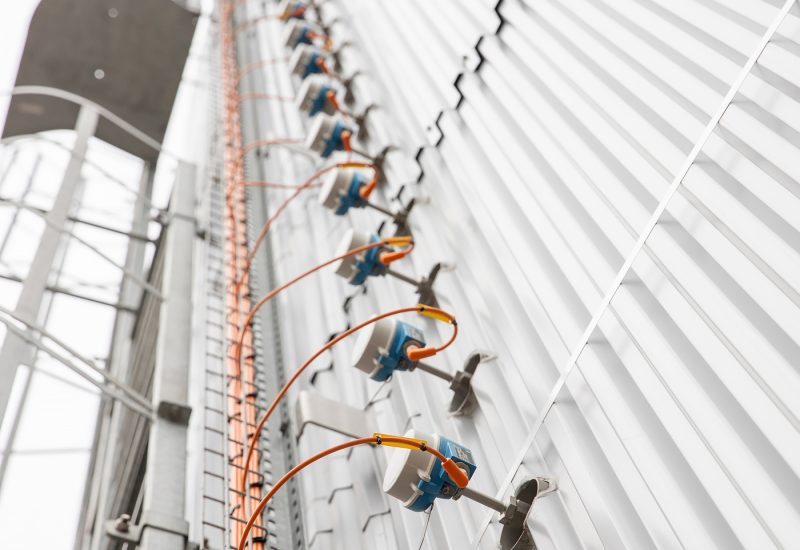
- Optional multi-point temperature monitoring systems, providing real-time insights into fluid layer behaviour and performance
Enhance stratification with insulation and temperature management
To maintain stable stratification and prevent unwanted temperature fluctuations, we recommend combining stratification and diffuser systems with additional temperature control measures:
- High-performance tank insulation to reduce heat loss or gain, preserving fluid layer integrity
- Heating and cooling systems targeted at specific fluid layers for precise temperature control
- Multiple temperature sensors placed throughout the tank to monitor stratification in real-time and optimize process adjustments
The importance of effective stratification control
Effective stratification control is crucial to optimizing the performance, efficiency, and longevity of stainless steel storage tanks. By integrating advanced diffuser technology with tailored tank designs, Gpi ensures that fluid layers remain stable, processes run smoothly, and energy consumption is minimized. This holistic approach supports consistent product quality and reduces maintenance needs, making it an essential component in modern industrial tank solutions.