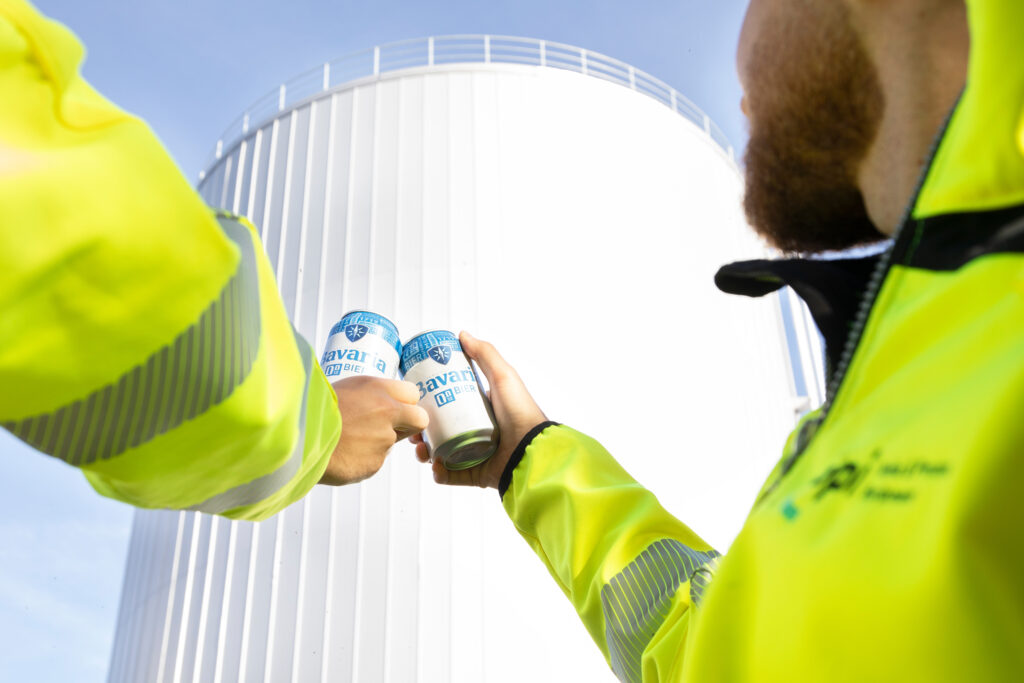
Safe demineralized water storage for hydrogen production
The growth of green hydrogen as a sustainable energy carrier demands high quality process solutions. One of the critical components in this process is the reliable storage of purified water used in electrolyzers. Gpi supplies custom made stainless steel or duplex water tanks, specifically designed for use in electrolysis systems.
With over 30 years of experience in designing, manufacturing, and installing stainless steel storage tanks, we support hydrogen producers in setting up their installations safely and efficiently.
Why stainless steel water tanks are essential in electrolyzer installations
Stainless steel water tanks play a critical role in electrolyzer installations. Water is the feedstock from which hydrogen is produced via electrolysis. To ensure this process runs efficiently and reliably, storing demineralized water in stainless steel or duplex tanks is a must. Purity is key; impure water can contaminate the electrolyzer and reduce efficiency.
1. Purity of water supply
Electrolyzers require ultra-pure water for optimal performance. Stainless steel tanks:
Resist leaching and contamination.
Maintain water purity better than plastic or mild steel alternatives.
Are non-reactive, preventing unwanted chemical interactions.
2. Corrosion resistance
Hydrogen production involves exposure to moisture and varying temperatures. Stainless steel:
Offers superior corrosion resistance, even under harsh environmental conditions.
Prevents rust and particulate contamination that can damage sensitive electrolyzer components.
3. Durability and longevity
Electrolyzer systems are long-term investments. Stainless steel tanks:
Have a longer service life compared to plastic or coated tanks.
Withstand mechanical wear, pressure fluctuations, and temperature cycling.

Applications of our tanks in electrolysis processes
Our tanks are used in various stages of hydrogen production:
Demineralized water storage: Ultrapure water is required for electrolysis. Our tanks safely and cleanly store this water before it enters the electrolyzer.
Buffer tanks: Buffer storage is essential when production capacity fluctuates or during system maintenance.
Condensate collection: After the process, condensate can be recovered and collected in dedicated tanks.
Cooling water storage: Electrolyzer stacks generate heat. Cooling water tanks are needed to regulate temperature.

Technical specifications
We build both on-site constructed tanks and fully prefabricated tanks delivered as a complete unit.
Feature
- Material:
- Capacity:
- Orientation:
- Insulation:
- Cleaning:
- Pressure:
- Certification:
Specification
- Stainless steel 304(L), 316(L), Lean duplex 2101, Duplex 2304, Duplex 2205
- Up to 12,500 m3
- Vertical or horizontal, prefab or on-site built
- Optional: mineral wool, PUR, PIR with aluminium or stainless steel cladding
- Manhole, CIP (Clean-In-Place) options
- Atmospheric or low-pressure
- PED, EN-13445, ISO 9001, EN 14015
Gpi as your partner in the energy transition
As a specialist in stainless steel tanks, we help hydrogen producers design their installations to be safe and efficient. Whether it’s a pilot project of a few megawatts or a gigawatt-scale electrolyzer, we deliver tanks tailored to your specifications and process.
Our engineers are involved from the start, providing input on design, connections, hygienic finish, and ease of maintenance. Thanks to our modular construction methods, we are able to deliver quickly — even for large-scale projects.
Frequently Asked Questions (FAQ) about water tanks for electrolysis
What type of water is used for electrolysis?
Demineralized or ultrapure water (UPW) is required to prevent electrode contamination and improve efficiency.
How much water is used in hydrogen production?
Approximately 9 liters of water are needed to produce 1 kg of hydrogen. Large-scale production therefore requires significant water storage
Are stainless steel tanks suitable for ultrapure water?
Yes, stainless steel 316(L) is highly suitable for storing ultrapure water. If required, a hygienic finish can also be applied.
Do you supply tanks built on-site?
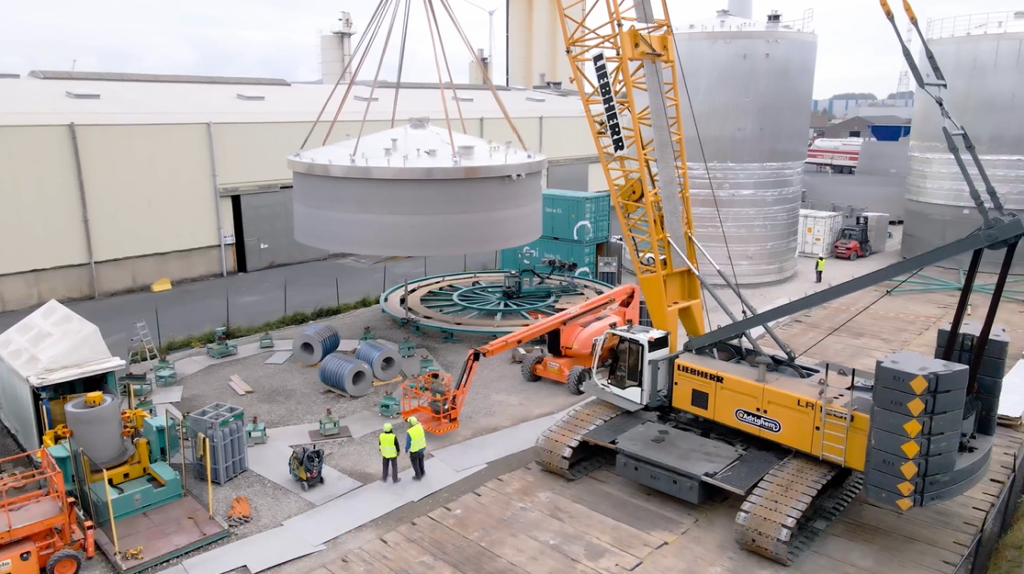
We construct large stainless steel tanks on-site using our Coil Building method, allowing us to realize tanks over 12,500 m³.
Do your tanks comply with PED guidelines?
Yes, we design and manufacture according to European directives such as PED 2014/68/EU, where applicable.
Do your tanks meet EN14015 standards?
Yes, our tanks are designed and built according to European standards such as EN 14015, when required.
Do your tanks meet Eurocode 3 requirements?
Yes, we follow European standards such as EN 1993-4-2 and EN 1090, when applicable.
What materials are used for water storage?
We recommend stainless steel 304, 316, Lean duplex 2101, or Duplex 2205. Combinations of these can be used to create the most efficient design. Our experts are happy to assist you.